
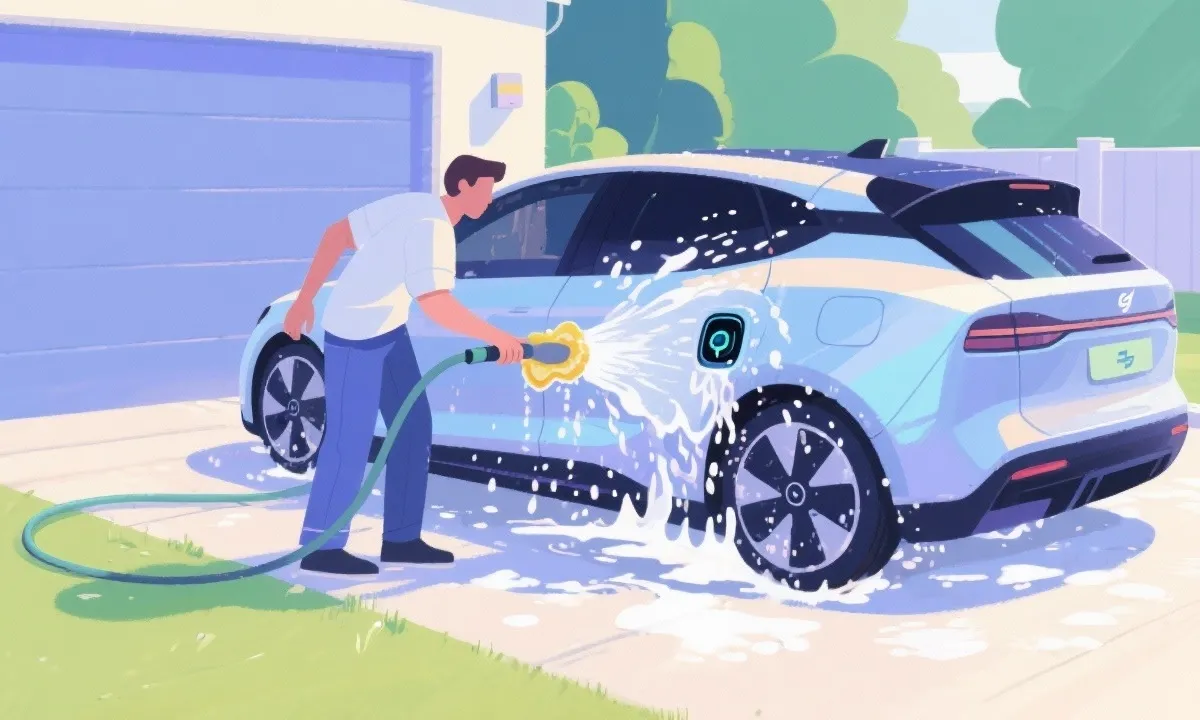
You’ve just bought a shiny new electric car (EV). It’s quiet, futuristic, and eco-friendly — but one day you notice dust and mud all over it. That’s when the question hits: “Can I wash my electric car like a normal car?”
It’s a fair question. With so much technology under the hood — batteries, sensors, and high-voltage systems — it’s natural to feel cautious. The last thing anyone wants is to accidentally damage something expensive with a bucket of water or a pressure hose.
The good news? Yes, you can absolutely wash an electric car just like a normal petrol or diesel car — safely and effectively. But there are a few important precautions to keep in mind.
In this detailed guide, we’ll explain everything you need to know about washing EV cars, what’s safe, what to avoid, and how to make your EV shine without worry.
Understanding the Basics: How EVs Are Built Differently?
Before beginning the washing process, let’s understand what makes EVs special.
Traditional cars have engines, fuel systems, and exhausts. Electric cars replace all that with:
- A battery pack (usually sealed and waterproof)
- Electric motors instead of engines
- High-voltage wiring systems
- Electronic control modules and sensors
These components are safely enclosed and insulated. Car manufacturers design EVs to handle rain, puddles, and even automated car washes. After all, if your EV can drive in heavy rain without getting electrocuted, washing it isn’t dangerous — as long as you follow basic care steps.
Can You Really Wash an EV Like a Normal Car?
Yes — and manufacturers expect you to. In fact, every electric vehicle is designed to be water-resistant to a certain degree.
EVs go through strict safety tests, including:
- Ingress Protection (IP) ratings, which measure how well components are sealed from dust and water.
- Battery packs are built with waterproof casings.
- Electrical connectors are shielded and grounded for protection.
So, whether it’s rainwater, hose spray, or even an automatic car wash, your EV can handle it — provided you avoid a few common mistakes.
Things to Keep in Mind Before Washing an Electric Car:
Let’s go over a few simple rules that will help you wash your EV safely and correctly.
1. Turn Off the Car Completely:
Always make sure your EV is switched off before washing. This prevents the risk of activating any sensors or automatic features like wipers or lights while you’re working.
2. Avoid Charging During the Wash:
Never wash your EV while it’s plugged in. Water and electricity don’t mix, and even though EV charging systems are designed with multiple safety layers, it’s best to play it safe.
Tip: Finish charging first, unplug the cable, close the charging port, and then start washing.
3. Close All Ports and Windows:
Ensure that the charging port, windows, and doors are fully shut. Water shouldn’t get into any part that isn’t sealed.
Most EVs have rubber seals around doors and ports — just make sure they’re clean and intact.
4. Don’t Use High-Pressure Water on Sensitive Areas:
Avoid aiming high-pressure water jets directly at:
- The charging port
- Wheel sensors or cameras
- The undercarriage
A gentle rinse is fine, but a strong jet close-up can force water where it shouldn’t go.
Safe Ways to Wash Your Electric Car:
Now that you know the do’s and don’ts, let’s go through the different methods of washing your EV safely.
1. Hand Wash (Recommended Method):
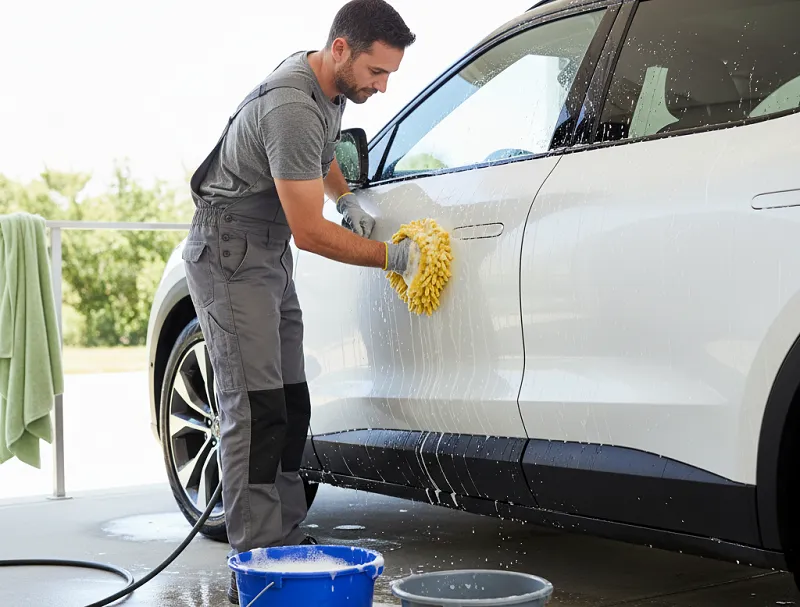
This is the safest and most satisfying way to clean your EV. Here’s a step-by-step guide:
Step 1: Rinse Lightly
Start with a light rinse to remove dust and dirt. Avoid directing the water stream too forcefully near joints or sensors.
Step 2: Use Mild Car Shampoo
Use a car-safe, pH-balanced shampoo with a microfiber sponge or mitt. Don’t use detergent or household soap — they can strip the wax or protective coating.
Step 3: Wash Top to Bottom
Start from the roof and move downward. This helps dirt flow away without scratching the paint.
Step 4: Rinse Again
Rinse off all soap residue gently.
Step 5: Dry Properly
Use a microfiber drying towel to prevent water spots. Don’t air dry under direct sunlight.
Bonus Tip: After drying, apply a light wax coat. It protects the paint from dust and makes future washes easier.
2. Touchless or Automatic Car Wash:
Many EV owners use automatic car washes, and that’s perfectly fine — as long as it’s a touchless type.
- Touchless washes use water jets and soap without brushes, reducing the risk of scratches.
- Conveyor-style washes with brushes can cause minor abrasions, especially on EVs with glossy paint finishes.
Before entering, double-check:
✅ Charging port closed
✅ Windows and sunroof sealed
✅ Mirrors folded (if required)
3. Pressure Wash (With Caution):
If you prefer a pressure washer, you can use it — but carefully.
Keep the nozzle at least 2 feet away from the car’s body.
Avoid spraying directly into the charging area, sensors, or camera lenses.
Ideal Pressure Range: 1200–1900 PSI is safe for most EV exteriors.
What About the Undercarriage?
Safe ways to wash your electric car are usually located at the bottom of the car — this often worries new owners.
Good news: The battery compartment is fully sealed with a protective casing.
Manufacturers test these battery packs under extreme rain simulations.
So, gentle undercarriage washing is safe. Just don’t point a strong water jet directly underneath for long periods.
Can You Wax or Polish an Electric Car?
Absolutely! EV paint is no different from other vehicles. You can:
- Wax the body for protection and shine.
- Polish to remove light scratches.
- Apply ceramic coatings if you wish — they help repel dirt and water.
One thing to note: avoid using heavy wax or polish near badges, sensors, or cameras. These areas are delicate and may not react well to certain chemicals.
Can You Wash an EV Motor Bay?
Unlike petrol cars, EVs don’t have traditional engine bays. Instead, they have sealed compartments with electronics.
You should not hose down this area.
If you want to clean under the hood, use a damp microfiber cloth to wipe dust gently.
Avoid direct water contact with:
- Power cables (orange ones)
- Electronic modules
- Cooling fans
If it looks too dirty, it’s better to ask a professional detailing service that handles electric cars.
How to Clean the Charging Port Safely?
Your charging port is one of the most important parts of your EV. It’s designed to handle outdoor conditions, but cleaning it needs care.
Follow these steps:
- Make sure the car is off and unplugged.
- Wipe around the port with a dry microfiber cloth.
- If needed, use a soft brush to remove dust or sand.
- Avoid using water, soap, or spray cleaners inside the port.
If moisture accidentally enters, leave it open to air dry before charging again.
Tips for Interior Cleaning of an Electric Car:
Electric cars often have touch screens, digital dashboards, and sensitive buttons — so interior cleaning also needs gentle handling.
- Use a slightly damp microfiber cloth for screens and glass.
- Avoid alcohol-based sprays.
- Clean fabric or leather seats with mild cleaners.
- Never use a vacuum cleaner while the car is charging.
Keeping your cabin clean not only makes your EV look great but also helps with hygiene and resale value.
Myths About Washing Electric Cars:
Let’s clear a few myths that confuse new EV owners:
Myth 1: Water can damage an EV’s battery.
➡️ False. EV batteries are sealed in waterproof enclosures tested for deep water exposure.
Myth 2: You can’t use an automatic car wash.
➡️ Not true. Most EVs can safely go through automatic or touchless washes.
Myth 3: Washing an EV can cause electric shock.
➡️ Completely false. The electrical systems are insulated. You’re more likely to get wet than shocked!
Myth 4: You must avoid washing the car in the rain.
➡️ Rain doesn’t affect EVs any more than normal cars — they’re built for all weather conditions.
Extra Care Tips for EV Owners:
Here are a few bonus tips to make your EV washing routine smarter and safer:
- Avoid direct sunlight: Wash in the shade to prevent soap stains.
- Use two buckets: One for soap, one for rinsing — keeps dirt off the sponge.
- Inspect seals: Check rubber linings around doors occasionally for cracks.
- Keep charging accessories dry: Store cables in a clean, dry place.
- Schedule regular detailing: Once every few months, get a professional deep clean.
How Often Should You Wash an Electric Car?
There’s no fixed rule, but it depends on your usage and environment.
- Weekly or biweekly: If you drive in dusty, coastal areas or long road trip.
- Monthly: For normal city driving.
- After rain: Always rinse to remove mud and road grime.
Keeping your EV clean isn’t just about looks — it helps maintain the paint, sensors, and aerodynamic efficiency.
Conclusion:
So, can you wash an electric car like a normal car?
✅ Yes — safely and easily.
Modern EVs are designed to handle water without risk. Their batteries, wiring, and connectors are sealed and tested for real-world weather conditions.
Just remember:
- Don’t wash while charging.
- Avoid high-pressure jets on sensitive parts.
- Keep charging ports dry and closed.
- Use gentle car shampoos and soft cloths.
That’s it! Your electric car will stay spotless and happy for years to come.